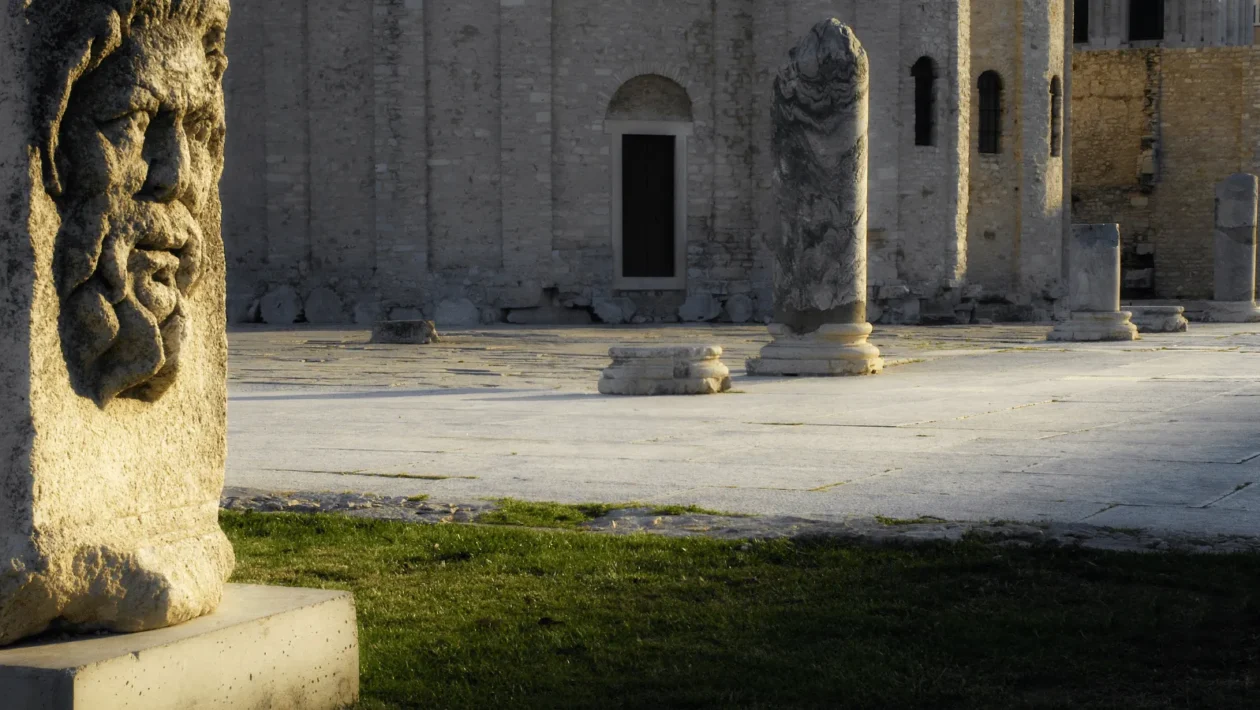
Roman heritage in Dalmatia is among the best-preserved in Europe. From the imposing Forum in Zadar to the living streets of Diocletian’s Palace in Split, the ancient Romans left an indelible mark on Croatia’s Adriatic coast. This guide takes you through the most significant Roman sites in Dalmatia – from Zadar’s Iader and Nin’s Aenona to the former capital of the Roman province of Dalmatia, Salona (modern Solin). Whether you are a history enthusiast or a curious traveler, this Roman heritage route will transport you back two thousand years.
In this guide: Zadar’s Roman Forum and Capitolium | Diocletian’s Palace in Split (UNESCO) | Salona – capital of Roman Dalmatia | Roman temple in Nin | Burnum military camp | Asseria | Narona (Vid).
Why Roman Heritage in Dalmatia Matters
Dalmatia, named after the Illyrian tribe of the Dalmatae, became a Roman province in 32 BC after the Great Illyrian Revolt was suppressed. For over six centuries, this coastal region was a vital part of the Roman Empire – a bridge between Italy and the eastern provinces. The Romans built cities, roads, aqueducts, amphitheaters, and forums, transforming the Adriatic coast into a thriving economic and administrative hub.
Today, Roman heritage in Dalmatia is not hidden behind museum glass. It lives in the foundations of medieval cathedrals, in the layout of modern city centers, and in the stones beneath your feet as you walk through Zadar old town or Split’s historic core. Read more: Zadar Old Town – History, Culture and Adriatic Identity.
Roman Sites in Zadar: Forum, Capitolium and Archaeological Museum
Zadar, known in Roman times as Iader, was founded as a Roman colony in the mid-1st century BC where Roman veterans settled. At its heart lay the Forum – one of the largest forum complexes on the eastern Adriatic coast, measuring 45 by 90 meters. Construction began during the reign of Emperor Augustus (27 BC – 14 AD), and the Forum served as the political, commercial, and religious center of Roman Iader.
The Roman Forum in Zadar (Iader)
Today, the Roman Forum Zadar ruins remain completely accessible and free to visit, open 24 hours a day. Located between the Church of St Donatus and the waterfront, this public square still reveals the original layout of colonnades, tabernae (shops), and temple foundations.
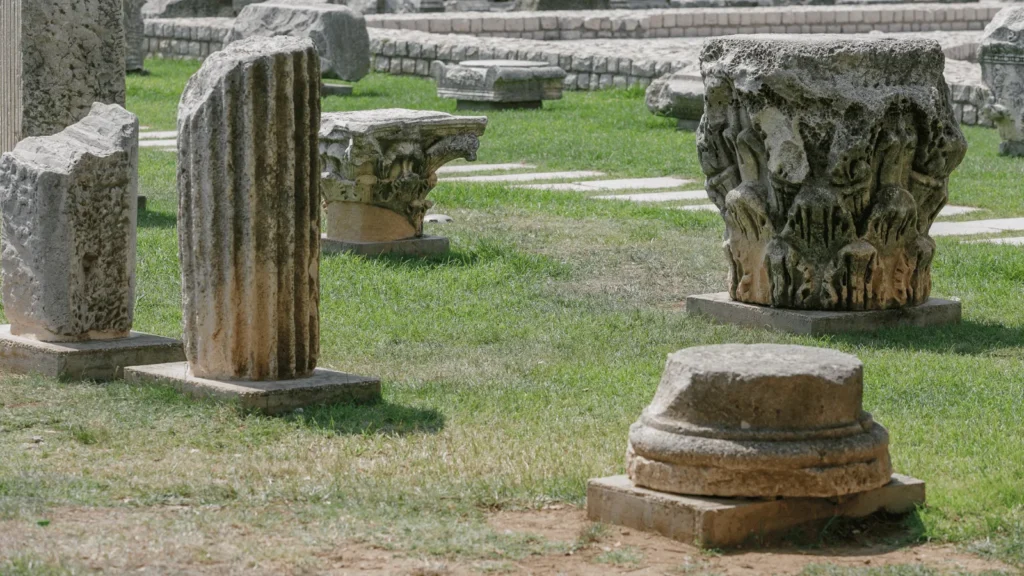
Among the most evocative remains is a single standing Roman column, which in the Middle Ages was repurposed as the “Pillar of Shame” – a pillory where wrongdoers were chained for public humiliation. Chains from that period are still visible at the base. Nearby, you will find altars with reliefs of the mythical figures Jupiter Ammon and Medusa – hollows on top were used for blood sacrifices.
Practical information: Entry is free. The Forum is an open public space accessible year-round, 24/7. Best visited in the morning or late afternoon when the light illuminates the stone remains. Explore Zadar’s ancient core: Zadar Old Town Guide.
The Capitolium – Temple of Jupiter, Juno and Minerva
On the southwestern section of the Forum stood a two-meter-high capitol, crowned by a magnificent temple dedicated to the divine triad of Jupiter, Juno and Minerva. The facade originally featured six Corinthian columns. Only the staircase, the pavement, and two antique columns survive today – one still standing, the other relocated. In Roman times, this was the most sacred space in Iader, where official rituals and ceremonies connected the community with the gods.
Late antiquity saw Christian basilicas built over pagan foundations, and by the early Middle Ages, stone from the temple was reused to construct the nearby Church of St Donatus – literally building Christianity on Roman foundations.
Archaeological Museum Zadar
For a deeper understanding of Roman heritage in Dalmatia, visit the Archaeological Museum Zadar, established in 1832 – one of the oldest museums in Croatia. Located near the Forum, its collection includes Roman stone monuments, inscriptions, glasswork, statues, urns, dice, spears, armor, and a model of the Forum as it originally appeared. The museum also houses artifacts from the wider Zadar region, including the Roman city of Iader and its necropolises.
Practical information: Open year-round (check seasonal hours). Admission fee applies – combination tickets with other sites may be available.
Roman Temple in Nin (Aenona)
Just 14 kilometers north of Zadar, the small town of Nin (Roman Aenona) holds an often-overlooked gem of Roman heritage in Dalmatia. In the very center of Nin, on the site of the former Roman Forum, stand the remains of a 1st-century AD Roman temple – the largest Roman temple on the east coast of the Adriatic Sea.
The temple dates from the reign of Emperor Vespasian (69–79 AD). The podium was accessed by a monumental staircase, the foundations of which are still visible. A reconstructed Corinthian pillar, originally 17 meters tall, has been erected on the temple to evoke the original grandeur of Aenona – once a famous and wealthy Roman city.
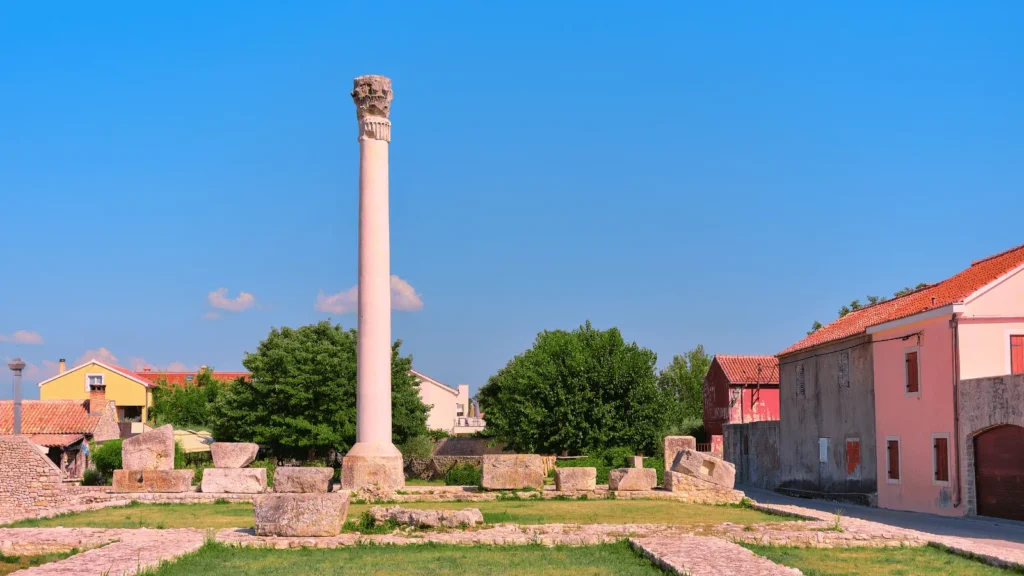
Practical information: The site is open and free to visit. Nin is easily reached from Zadar by car (approximately 20 minutes) or by local bus. Combine your visit with a stop at the Church of the Holy Cross (9th century) – known as the smallest cathedral in the world – and Nin’s famous healing mud and salt pans.
Diocletian’s Palace in Split: A Living Roman Monument
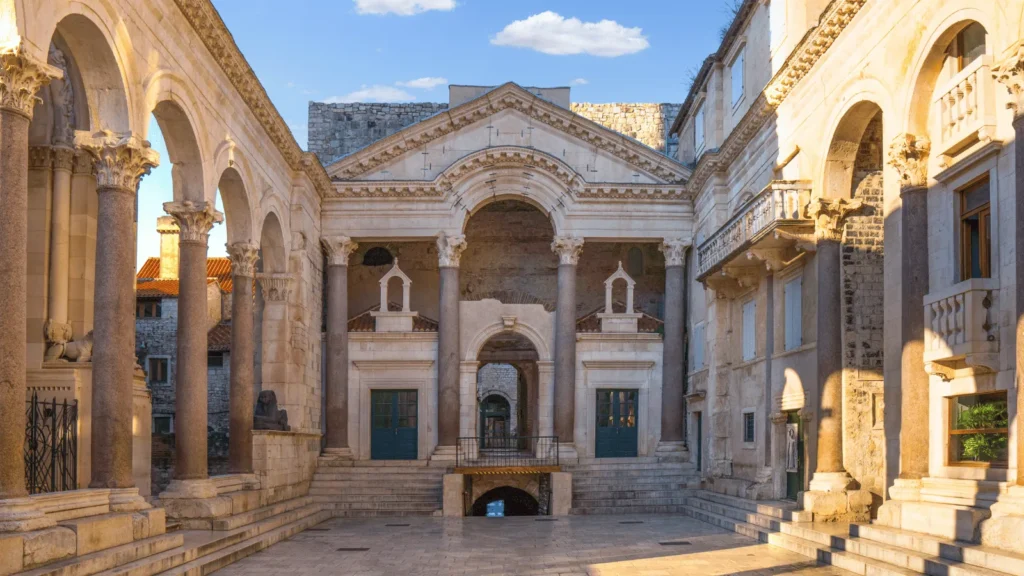
The crown jewel of Roman heritage in Dalmatia is undoubtedly Diocletian’s Palace in Split. Built between 295 and 305 AD as a retirement residence for the Roman Emperor Diocletian, this sprawling complex of approximately 30,000 square meters is one of the largest and best-preserved examples of Roman palatial architecture in the world.
Designated a UNESCO World Heritage site in 1979, the palace is not a relic preserved behind glass – it is the living heart of modern Split. More than 3,000 residents live within its 1,700-year-old walls. The palace’s original walls rise 22 meters high on the seaward side and 18 meters on the northern side, with three remaining towers out of the original sixteen, and four original gates.
What to See Inside Diocletian’s Palace
The Peristyle (Peristil) is the palace’s central square – a colonnaded courtyard where the emperor once appeared before his subjects. Today, it is a popular meeting place lined with cafes and souvenir shops. The Cathedral of St Domnius, built within the palace’s mausoleum, is officially the oldest Catholic cathedral in the world. Climb its bell tower for 360-degree views of Split and the Adriatic.
The Cellars of Diocletian’s Palace are remarkably preserved vaulted basement halls – recognizable to Game of Thrones fans as filming locations for Daenerys’ scenes. The Vestibule, once the entrance to the residential part of the palace, has reverberant acoustics that are still impressive today. Other highlights include Egyptian sphinxes brought to Split by Diocletian himself, and the world’s smallest church – the Church of Saint Martin, measuring only 1.64 meters wide.
Practical information: The palace grounds are open 24/7 and free to explore, though individual attractions (cathedral, cellars, bell tower, temples) charge admission fees (€5–10 per site). Allow at least 2–3 hours. Split is easily reached by bus, ferry, or car from Zadar (approximately 1.5–2 hours by road).
Enhance your Roman heritage journey: Greeting to the Sun – Zadar’s sunset light show.
Salona (Solin): Capital of the Roman Province of Dalmatia
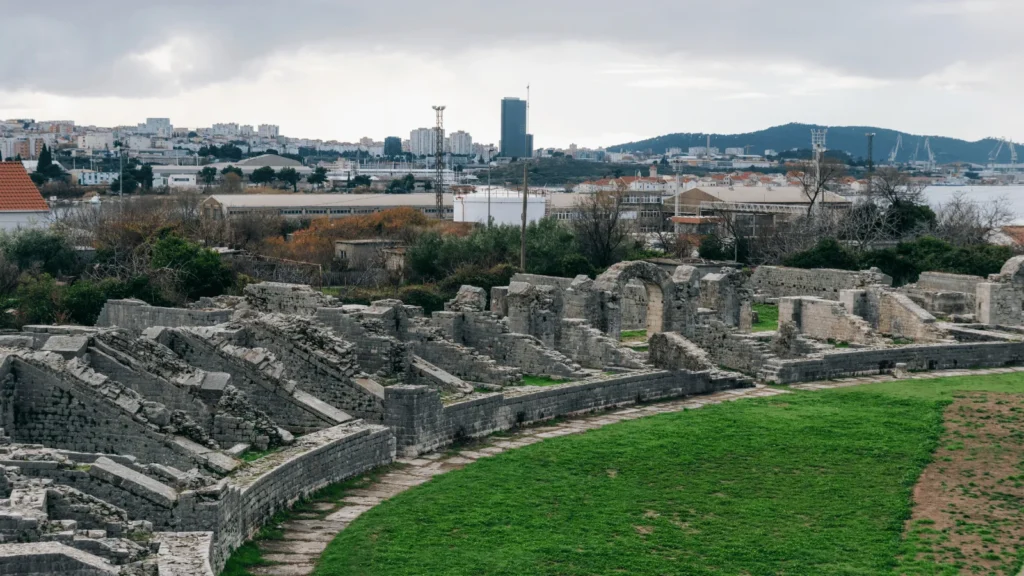
Just 5 kilometers northeast of Split lies Salona (Solin) – the capital of the Roman province of Dalmatia. In its heyday, Salona was a thriving city of over 60,000 inhabitants, complete with a forum, amphitheater, theaters, baths, and massive defensive walls with towers and gates. It was also believed to be the birthplace of Emperor Diocletian.
Salona was first mentioned as an Illyrian town in 119 BC. The Romans seized the site in 78 BC, and under Augustus, it became the administrative headquarters of Dalmatia. After the Avars and Slavs sacked the city in the 7th century, the surviving population fled to the safety of Diocletian’s Palace – the origin of modern Split.
The Archaeological Site Today
Salona is the largest archaeological park in Croatia. Visitors can walk among the remains of the forum, an amphitheater, several early Christian basilicas, a theater, baths, and the city walls. The Manastirine area contains numerous sarcophagi and the remains of an early basilica built over Christian martyrs’ graves. The site is exceptionally well-preserved and well-signed, with accessible paths along the top of the defensive wall offering superb views of the ruins.
Practical information: The site is open daily from April through September (8:00–20:00) with earlier closing in winter. Entry fee: approximately €5–6. Access is by bus from Split (bus number 1, departure from Trg Gaje Bulata, journey time 15–20 minutes) or by car.
Other Roman Sites in Dalmatia Worth Exploring
Beyond the major sites listed above, Roman heritage in Dalmatia extends across the region:
- Narona (Vid, near Metković): The site of a Roman temple dedicated to the Emperor Augustus, with an on-site archaeological museum built directly over the original Roman remains (in situ – the first museum of its kind in Croatia). Located in the Neretva valley, deep in southern Dalmatia.
- Trogir: The entire historic center is a UNESCO World Heritage site, built on the foundations of the Roman city of Tragurium. Roman street patterns and building foundations survive beneath medieval layers.
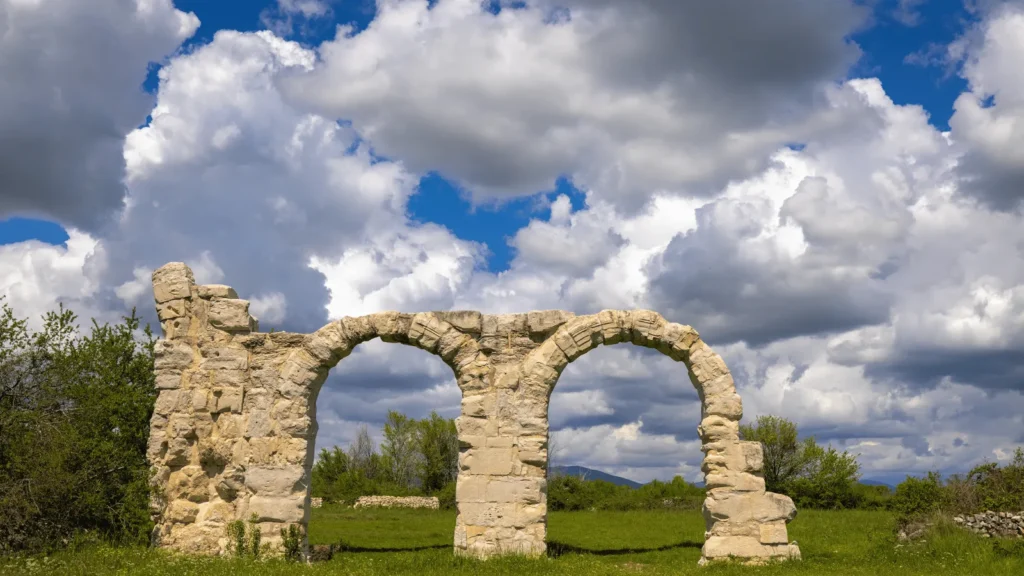
- Burnum (near Kistanje, northern Dalmatia): A Roman military camp (castrum) with an amphitheater and the remains of a praetorium (commander’s residence). Burnum was an important legionary fortress controlling the inland routes.
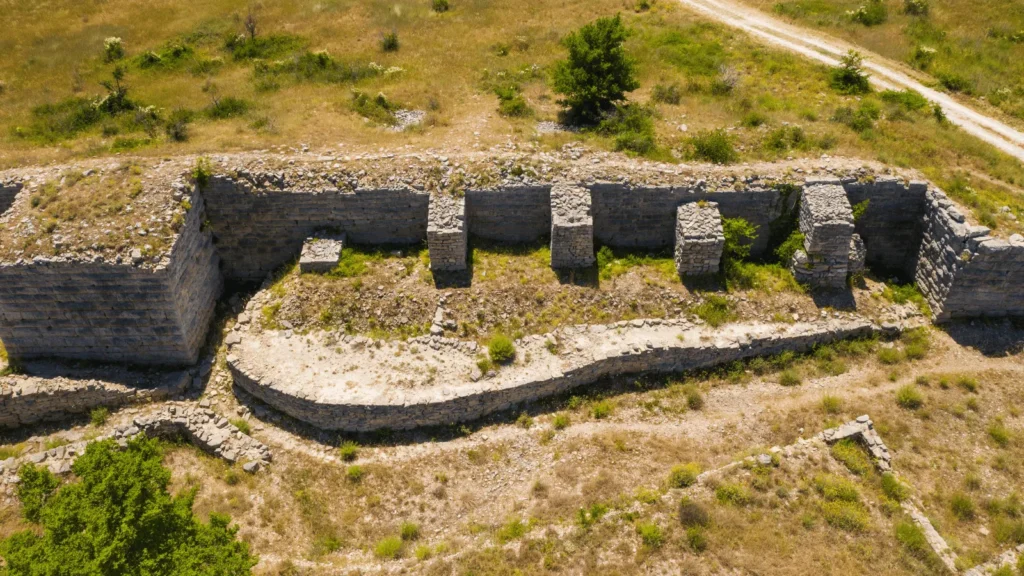
- Asseria (near Benkovac): A Liburnian-Roman city with well-preserved defensive walls and a monumental city gate – one of the best-preserved Roman city gates in Croatia.
Read more about Dalmatia’s UNESCO heritage: The region contains more than ten UNESCO World Heritage sites within a few hundred kilometers – a global rarity, as noted by the Split-Dalmatia County Tourist Board.
Practical Tips for Exploring Roman Heritage in Dalmatia
- Best time to visit: April–June and September–October offer pleasant temperatures and smaller crowds. July–August is peak season – arrive early at major sites to avoid the busiest hours.
- Getting around: A rental car is the most flexible option for visiting Nin, Burnum, Asseria, and Salona. Split and Zadar are well-connected by bus, ferry, and train. Narona in the south requires dedicated transport.
- Suggested route from Zadar: Zadar (2 days: Forum + Museum) → Nin (half-day: Roman temple) → Burnum (half-day) → Asseria (half-day) → Split (2–3 days: Diocletian’s Palace + Salona) → Narona (1 day). This covers the core Roman heritage in Dalmatia from north to south.
- Museums and combination tickets: Many sites offer discounted combination tickets. Archaeological museums in Zadar and Split have excellent Roman collections – allow at least 1–2 hours for each.
- Photography: The golden hours (early morning and late afternoon) provide the best light for Roman ruins, especially at the Zadar Forum and Diocletian’s Palace. Drones require permits in most protected areas.
Conclusion: Roman Heritage in Dalmatia Awaits
From the Forum of Zadar (Iader) and the Roman temple in Nin (Aenona) to the living streets of Diocletian’s Palace in Split, and from the capital Salona to the military camps of Burnum – Roman heritage in Dalmatia offers an extraordinary journey through two thousand years of history. These sites are not cold museums – they are integrated into the daily life of modern Croatian cities, waiting for you to walk the same stones as Roman emperors, soldiers, and merchants.
Start your Roman heritage route in Zadar old town, explore the Forum and the Archaeological Museum, then travel south to Nin, Split and Salona. Each site reveals another layer of the Roman province that shaped the Adriatic identity of Dalmatia and Croatia. The stones are waiting.
Plan your journey: Start with Zadar Old Town | Experience the Sea Organ and Greeting to the Sun